
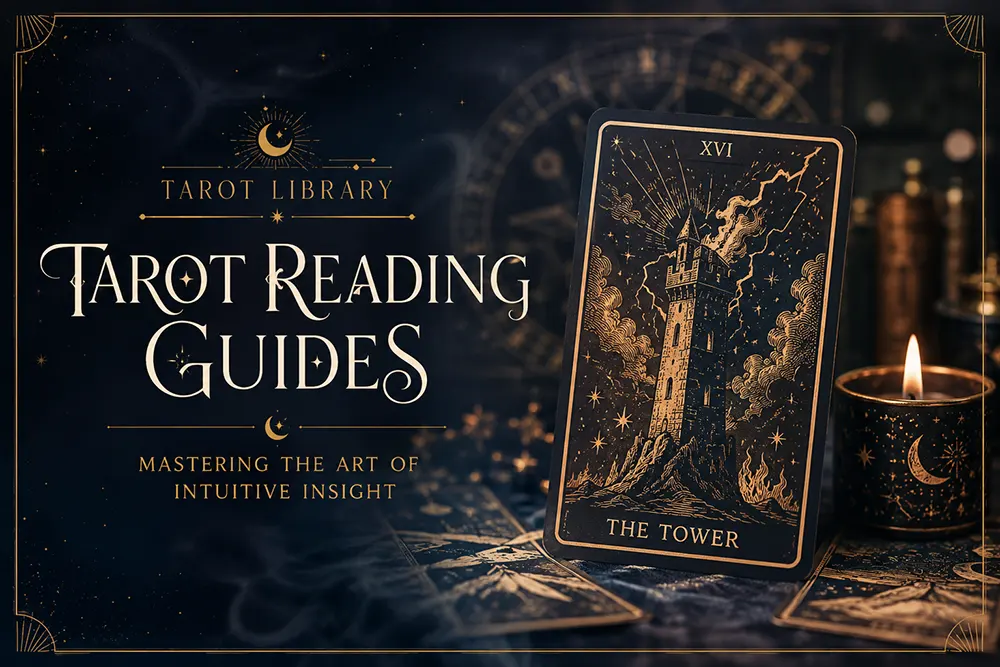
In the quiet moment before a reveal, the air often thickens with a client’s unspoken anxiety. As a reader, your hands hold more than just cardstock, they hold the potential to shift a person’s psychological state. When “challenging” archetypes like The Tower, Death, or the 10 of Swords manifest, the atmosphere can turn from curiosity to dread. However, the first rule of professional Tarot Reading Ethics is to dismantle the myth of “bad news”.
In the realm of professional practice, there is no such thing as a truly “bad” card. There are only difficult messages or necessary warnings that the subconscious is finally ready to process. The weight of the cards lies not in their imagery, but in the reader’s responsibility to translate these symbols into a narrative of growth. A professional reader acts as a neutral conduit, ensuring that the truth is delivered with a balance of radical honesty and profound compassion. By shifting the focus from “impending doom” to “impending evolution,” we uphold the integrity of the craft and ensure the client leaves with a sense of agency rather than a burden of fear.
The Foundations of Professional Conduct: “Do No Harm” in Tarot Reading Ethics
Establishing a reputable presence in the spiritual community requires more than just intuitive accuracy; it demands a foundational commitment to integrity and professional boundaries. In the modern landscape of spiritual guidance, your advice often touches upon the most sensitive aspects of a client’s existence—their emotional well-being, financial stability, and life-altering transitions. This level of influence places a profound responsibility on the reader to act with the same diligence as a specialized consultant.
Because a Tarot session can fundamentally shift a person’s trajectory, maintaining Professional Conduct is not just a choice—it is a mandatory safeguard. A professional reader understands that their words carry weight, acting as a steward for the client’s psychological safety. By adhering to a strict ethical code, you transform your practice from a casual consultation into a high-trust sanctuary where truth is delivered without the risk of causing unnecessary distress or dependency.
The “Do No Harm” Mandate
The supreme principle of Tarot Reading Ethics is to ensure your session never fosters fear, dependency, or psychological distress. A professional reader recognizes that their role is to empower, not to enslave the client to a specific outcome. This means avoiding “fatalistic” language that suggests a client has no control over their destiny.
Expert Tip: The Boundary Rule Always clarify at the start of a session that Tarot is a tool for reflection and mapping possibilities, not a replacement for legal, medical, or psychological professional advice.
Privacy, Consent, and Boundaries
Maintaining Professional Conduct also involves the sacred handling of data and energy.
- Privacy: Treat every session with the same confidentiality as a therapist would.
- Consent: Never pull cards for a situation the client hasn’t asked about, and strictly avoid “spying” on third parties without their energetic consent.
- The Professional Gap: It is vital to understand the Science of Celestial Timing—knowing that while cards show a “when,” the “how” remains in the client’s hands.

Mastering the Art of Delivering Hard Truths: From Doom to Empowerment
The true test of Tarot Reading Ethics isn’t when the Sun and the 10 of Cups appear; it’s how you handle the 10 of Swords. Delivering Hard Truths requires a linguistic shift from “passive fate” to “active evolution.” As a professional, your goal is to translate the energy of a card without stripping the client of their free will.
The Linguistic Pivot: Reframing Challenging Symbols
Instead of stating a definitive negative outcome, use the “Potential and Pivot” method. For example, if a reader sees a card indicating a career setback, Tarot Reading Ethics dictates that they should describe the energy as a “clearing of space” rather than just a “loss.”
- Weak Delivery: “You are going to lose your job next month.” (Creates fear and paralysis).
- Ethical Delivery: “The cards suggest an abrupt ending in your current professional structure. This transition, while challenging, is acting as a catalyst for a more aligned path.”
By focusing on the purpose of the challenge, you maintain Professional Conduct while giving the client the mental room to prepare. This approach aligns with the concepts of Quantum Scripting and Neural Rewiring, where words are used to reshape the client’s perceived reality.
Providing Actionable Advice for Growth
A reading should never end on a low note. In Tarot Reading Ethics, every “hard truth” must be accompanied by an “actionable exit.” If the cards show a conflict, the reader should immediately look for a “bridge card” to show how the client can mitigate the damage. This ensures the client feels like the protagonist of their life, not a victim of the cards.
Expert Tip: The “What Now?” Rule
Never leave a client with a problem without also identifying a resource. If the cards show emotional burnout, suggest specific Shadow Work techniques to help them process the underlying triggers.
Client Safety: Handling Vulnerability and Avoiding Predictive Traps
At the heart of Tarot Reading Ethics is the concept of Client Safety. Many people seek out Tarot when they are at their most vulnerable—during heartbreaks, financial crises, or identity shifts. This heightened state of “emotional fragility” makes the reader’s words carry immense weight.
Identifying Psychological Fragility
A professional reader must be able to distinguish between a client who needs spiritual guidance and a client who needs clinical intervention. Tarot Reading Ethics requires you to step back if you sense a client is in a mental health crisis. Relying on professional intuition, much like analyzing a Birth Chart for Soul Bio-Data, helps you identify when the energy is too unstable for a standard reading.
The Danger of Predictive Traps
One of the most significant violations of Tarot Reading Ethics is making absolute predictions about death, serious illness, or legal outcomes. Not only is this often inaccurate due to the fluid nature of time, but it can also cause “Self-Fulfilling Prophecy” syndrome, where the client’s anxiety actually manifests the negative state.
For high-level insights on why absolute certainty in “destiny” is often a fallacy, professionals should consult academic perspectives on The Psychology of Divination.
The “Exit Strategy”: Ending with Strength
How a session ends is just as important as how it begins. To ensure Client Safety, use a three-step exit strategy:
- Summary: Reiterate the growth points, not the fears.
- Validation: Acknowledge the client’s strength in facing the truth.
- Grounding: Give them a simple physical task (like a grounding meditation or a journaling prompt) to bring them back to the present moment.
| Feature | Fear-Based Reading | Ethical Reading (Client Safety) |
| Tone | Fatalistic & Authoritarian | Collaborative & Compassionate |
| Focus | Impending Doom | Lessons and Solutions |
| Outcome | Client feels anxious/dependent | Client feels empowered/grounded |
Common Ethical Dilemmas: Navigating the Grey Areas of Tarot
Even with a strong foundation in Professional Conduct, every reader will eventually face “grey area” situations. These dilemmas test your commitment to Tarot Reading Ethics and require a delicate balance between honesty and boundaries.
The Ethics of Third-Party Readings
One of the most common requests is: “What is my ex thinking?” or “Is my boss going to fire me?” Ethically, reading for someone who hasn’t given consent is a boundary violation.
- The Solution: Pivot the focus back to the client. Instead of “What is the ex thinking?”, suggest: “How can you find emotional closure regardless of your ex’s current state?” This aligns with Spiritual Awakening and Unlearning patterns that keep clients stuck in the past.
Balancing “Tough Love” with Compassion
When a client is clearly self-sabotaging, Tarot Reading Ethics demands honesty. However, “Tough Love” should never be an excuse for being rude. If you see a pattern of “Analysis Paralysis”—a common theme in The Fool Tarot Meaning—your role is to gently point out the cycle and offer a way out, rather than judging their stagnation.
Managing Client Expectations
Some clients only want to hear “Yes” or “No.” A professional reader must manage these expectations from the start. Explain that Tarot is a map of currents, not a fixed script. For a deeper understanding of how modern readers manage expectations, the International Tarot Foundation provides excellent resources on setting professional boundaries.
The Reader as a Lighthouse in the Storm
Adhering to Tarot Reading Ethics does not make your readings less accurate; it makes them more valuable. By mastering the art of Delivering Hard Truths and prioritizing Client Safety, you transform from a mere “fortune teller” into a trusted guide—a lighthouse.
A lighthouse doesn’t stop the storm, and it doesn’t steer the ship. Its only job is to shine a light on the rocks so the captain can navigate safely to shore. When you uphold these ethical standards, you build the kind of E-E-A-T (Expertise, Experience, Authority, Trust) that defines a truly professional practice in the 21st century.
Call to Action (CTA): Have you ever struggled with delivering a heavy message in a reading? Or perhaps you’ve received “bad news” in a way that felt disempowering? Share your experiences in the comments below, and let’s work together to build a more ethical and supportive Tarot community.
Frequently Asked Questions (FAQ)
Why is Tarot Reading Ethics important for professional readers?
Ethical standards protect both the reader and the client. They ensure that the reading remains a therapeutic and empowering experience, preventing the spread of fear and psychological dependency while building the reader’s professional reputation.
How do I tell a client a card looks “bad” without scaring them?
Focus on the energy of the card rather than a literal “doom” event. Use the “Actionable Advice” method: explain what the card is asking the client to change, release, or prepare for. Shift the narrative from “this will happen to you” to “this is how you can handle this energy.”
Can I refuse to do a reading based on Tarot Reading Ethics?
Yes. In fact, knowing when to say “no” is a key part of Professional Conduct. If a client is obsessed, under the influence, or asking about medical/legal issues beyond your expertise, it is your ethical duty to decline or refer them to a specialist.
Should I always mention the “negative” cards in a spread?
Transparency is vital, but delivery is everything. You should not hide challenging cards, but you should contextualize them. For instance, the Ace of Pentacles might signify a new beginning, but if reversed or blocked, you might discuss the blocks to passive income rather than just saying “no money is coming.”
How does Tarot ethics relate to “Shadow Work”?
Ethics and Shadow Work are deeply linked. An ethical reader helps the client confront their “shadow” (hidden fears, patterns, or traumas) in a safe, controlled way, ensuring that the “darker” messages of the Tarot lead to ultimate healing and self-awareness.
Share this cosmic knowledge